


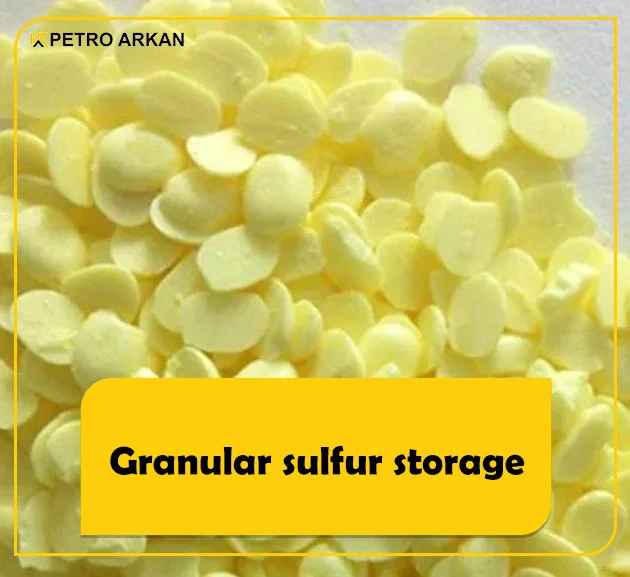
Granular sulfur storage is crucial for maintaining their effectiveness and safety in agriculture. Granular sulfur, an essential nutrient for plants, needs careful handling to preserve its quality and avoid potential risks during storage.
This guide offers key recommendations for the safe storage and handling of granular sulfur fertilizer, helping to maximize its benefits while minimizing environmental and health risks.

Granular sulfur
In the late 70s, in response to environmental standards and customer needs, the granulation process was developed to turn molten sulfur into dense, spherical granules. Granular sulfur, often called “lamps” or “chips,” is raw, unrefined sulfur used in agriculture.
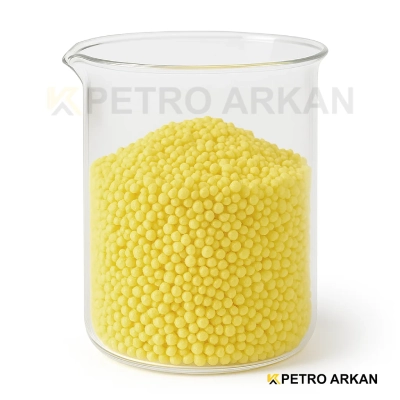
The process involves coating small sulfur particles (seeds) with molten sulfur in a rotating drum, cooling each layer before applying the next. Through repeated cycles, the granules grow to 1 to 6 mm. Then granular sulfur storage is ready to be delivered.
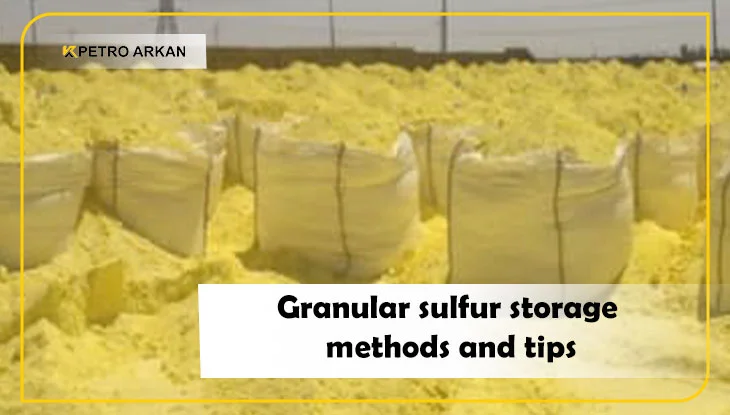
Granular sulfur storage methods and tips
Proper granular sulfur storage is essential for maintaining quality, preventing hazards, and ensuring ease of handling. Here are key tips and guidelines for granular sulfur storage:
1. Storage Conditions
- Dry & Well-Ventilated Area: Storing granular sulfur in a dry place to prevent moisture absorption and clumping. Ensure proper ventilation to prevent gas buildup.
- Temperature Control: Keep below 115.2°C (239.4°F) to prevent melting or softening. Avoid extreme cold, which can make granules brittle.
- Shaded or Covered Storage: Protect from direct sunlight and rain to prevent degradation.
2. Fire & Safety Measures
- Avoid Heat & Sparks: Sulfur is flammable, so keep it away from heat sources, open flames, and electrical sparks.
- Use Explosion-Proof Equipment: If using mechanical handling systems, ensure they are designed for combustible dust.
- Monitor Gas Emissions: Sulfur can release toxic hydrogen sulfide (H₂S) in moist conditions. Use proper gas detection systems.

3. Moisture Prevention
- Use Waterproof Liners: Store sulfur in moisture-resistant bags, bins, or silos with waterproof liners.
- Elevate Storage: Avoid direct ground contact to prevent moisture absorption. Use pallets or raised platforms.
4. Handling & Transportation
- Avoid Excessive Handling: Reduces dust formation and minimizes loss.
- Use Proper Containers: proper storage of granular sulfur is in polyethylene, polypropylene, or coated steel containers to prevent chemical reactions.
- Minimize Dust Accumulation: Regularly clean storage areas to prevent dust explosions.

5. Labeling & Documentation
- Mark Storage Areas: Use labels like “Sulfur – Flammable” for safety compliance.
- Follow Regulatory Guidelines: Comply with local storage regulations and Material Safety Data Sheets (MSDS) recommendations.
Want to know more about the Complete specifications of granular sulfur? Click here and make yourself up-to-date.
Tips for granular sulfur storage
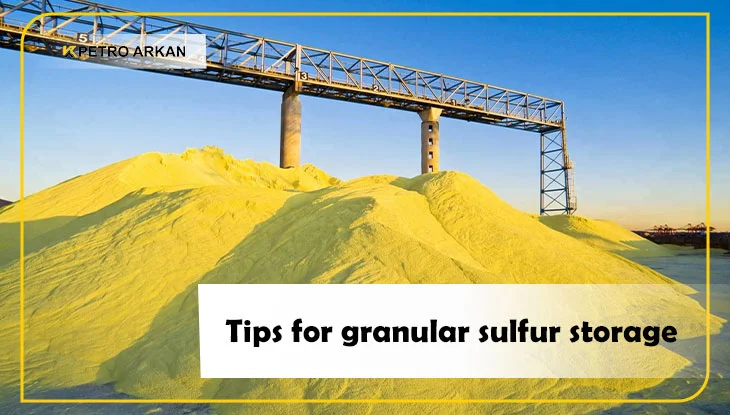
Granular sulfur storage can be inside or outside. Sulfur can be stored outside because it is stable and non-reactive in most conditions. Solid sulfur is inert and has low reactivity with water, air, and most substances, reducing risks like decomposition, fires, or explosions.
However, exposure to moisture or heat can cause it to react and produce sulfur dioxide gas. Therefore, sulfur should be stored in a dry, well-ventilated area to avoid hazardous gases. Despite its stability, sulfur is still a hazardous material and should be handled and stored according to safety regulations.
Sulfur storage and handling considerations
As it is obvious, sulfur handling is a key factor which you should consider. But do you know what the safe way of Granular sulfur storage is? In this part of the article, we will give you the necessary information about it.
Sulphur handling should be in a cool, dry place with good airflow to avoid the risk of harmful sulfur dioxide gas.
Here are some easy-to-follow rules for keeping Granular sulfur storage:
- Container
- Temperature
- Humidity
- Fire safety
- Labeling
Process of sulphur granulation systems
Sulphur granulation is the process of changing liquid sulphur into solid pieces. It’s very important in many fields. This process turns liquid sulfur into smooth, even granules by cooling it down and letting it harden.
It turns liquid sulfur, which is difficult to handle, into dry granules that are easy to move. Changing raw sulfur into small pieces is a complex process. It’s important for producing good sulphur granules for various uses.
- Step 1: Melting Sulfur The sulphur granulation process begins by heating solid sulphur until it melts at the right temperature. This is normally between 130-150°C to get the right texture for the next steps.
- Step 2: Creating Seeds. Small sulfur seeds are created by spraying liquid sulfur and then freezing them in a water tank. These seeds help make the final bits.
- Step 3: Making Granules. The seeds are placed in a spinning drum. There, they get coated with more hot sulphur until they reach the right size.
- Step 4: Cooling and Hardening. Good cooling and solidifying are important. Take good care of sulphur storage solutions. They make sure the sulfur granules fully harden into crystals. This stops clumping together or making dust.
Are you aware of other types of sulfur products? If NO, we provide the detailed information about granular sulfur vs. powdered sulfur and lump sulfur vs. granular sulfur, which can help you a lot.
Can I store sulphur outside?
Granular sulfur storage can be kept outside because it is safe and doesn’t react with most things in the environment. Solid sulfur does not react much with water, air, or most other things.
This means that sulfur is less likely to break down or react with other materials when it’s stored. This lowers the chances of problems like fires, explosions, or the release of toxic gases. So, sulfur should be kept in a dry place with good airflow to stop dangerous gases from building up.
Why Petroarkan?
Petroarkan is a trusted supplier of premium granular sulfur storage solutions, offering competitive prices. With a focus on reliability and quality, the company provides cost-effective and efficient options for agricultural needs.
Sulfur is essential for addressing soil deficiencies and plays a vital role in farming, but finding the right storage solutions can be challenging. Petroarkan simplifies this by offering top-quality granular sulfur storage products, making it the preferred choice for customers seeking both value and quality.
Summary
Granular sulfur storage requires a cool, dry, well-ventilated area, away from sunlight and moisture. Use airtight containers to preserve sulfur integrity. Keep it separate from incompatible materials, label it clearly, and inspect it regularly to ensure safety and prevent contamination. This helps maximize benefits while minimizing risks.
FAQ
- What is the ideal temperature for storing granular sulfur?
Store granular sulfur between 15°C and 30°C to avoid oxidation.
- What should be done if sulfur becomes solidified or lumpy in storage?
To prevent lumps, control temperature and humidity.
- How long can granular sulfur be stored?
Granular sulfur lasts longer in ideal conditions; poor storage can degrade it.


No comment