


Granular sulfur vs. powdered sulfur is a common point of discussion when choosing the right form of sulfur for various industries. Each type offers distinct benefits depending on the specific application. Understanding the differences between these two forms can help you make the best decision for your needs.
What is sulfur?
Sulfur, a key raw material in agriculture and industry, is found as yellow crystals and sourced from sulfide and sulfate ores. Primarily recovered from oil and gas processes, it is essential for sulfuric acid production and fertilizers and used in manufacturing carbon disulfide, rubber, paper, detergents, and increasingly in plastics and paint.

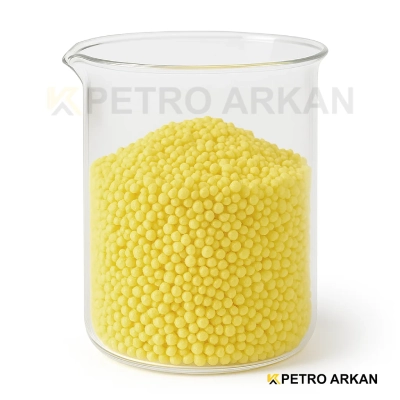

Sulfur-based fertilizers improve soil quality and boost crop yields. When it comes to sulfur forms, granular sulfur vs. powdered sulfur offers key differences. Both forms play essential roles, but the choice depends on the specific needs of the application.
As we mentioned, sulfur has an important role in the growth of plants. If you want to know more about the importance of sulfur in plant nutrition, follow us in this article.
Formula and specifications
Before going through granular sulfur vs. powdered sulfur, it’s necessary to know about sulfur. Sulfur (also spelled as Sulphur) is a chemical element with the symbol “S” and atomic number 16. It is a non-metal and commonly occurs in nature as both pure sulfur and in various compounds, such as sulfides and sulfates.
| Property | Description |
| Molecular Formula | S₈ (the octatomic molecule in a stable form) |
| Appearance | Yellow, odorless, crystalline solid at room temperature |
| Atomic Weight | 32.06 g/mol |
| Density | 2.07 g/cm³ (at room temperature) |
| Melting Point | 115.21°C (239.38°F) |
| Boiling Point | 444.6°C (832.3°F) |
| Solubility | Insoluble in water; soluble in carbon disulfide and organic solvents |
| Reactivity | Reacts with oxygen to form sulfur dioxide (SO₂) and sulfur trioxide (SO₃) |
| Applications | Used in fertilizers, chemicals, pharmaceuticals, and rubber vulcanization |
Different forms of sulfur
Sulfur is an essential element used in various industries and agricultural practices. It is available in different forms, each suited to specific applications. Here, we have types of sulfur in general, and then the differences between granular and powdered sulfur will be explained.
Types of Sulfur:
- Powder Sulfur: A fine dust, often a by-product of petroleum refining.
- Flake Sulfur: High-purity, thin, flat pieces with 99.5%+ purity.
- Granules Sulfur: Used in agriculture, with varying sizes.
- Lump Sulfur: Collected and processed for industrial uses.

Granular sulfur
Granular sulfur, produced through mining or oil refineries, is used in agriculture, rubber, and chemicals. As a fertilizer, it lowers soil pH, boosts nutrient absorption, and improves soil structure.
Sulfur is melted and sprayed into rotating drums, forming small granules. The granule size is controlled by adjusting speed, temperature, and airflow.
Uses:
- Agriculture: Lowers pH and enhances crops.
- Chemical Industry: Key for sulfuric acid and fertilizers.
- Rubber Industry: Used in vulcanization.
- Paper: Aids in sulfuric acid for papermaking.
- Pharmaceuticals: In medications and antioxidants.
Powdered sulfur
Sulfur powder is a yellow powder with a distinct odor, used in agriculture, chemicals, rubber, and more. It is produced through two primary methods: the Frasch method, which extracts sulfur from underground deposits, and the Claus process, which converts hydrogen sulfide into sulfur powder. This powder plays a crucial role in improving product quality and preservation.
Uses:
- Agriculture: Protects crops
- Chemicals: Makes sulfuric acid
- Rubber: Vulcanizes for strength
- Pharmaceuticals & Cosmetics: Treats skin, used in skincare
- Food: Preserves dried fruits
- Batteries: Used in lead-acid batteries

Granular sulfur vs. powdered sulfur
Sulfur comes in different forms, each suited for specific industrial and agricultural uses. The key differences between granules vs. powder sulfur are in their size, production processes, and applications.
Granular sulfur compared to powdered sulfur, is often preferred in agriculture due to its slow-release properties, which reduce the frequency of application.
Granular sulfur vs. Powdered sulfur:
| Property | Granules | Powder |
| Form | Larger, solid, spherical (2-6 mm) | Fine, small particles (-40 to -350 mesh, submicron) |
| Production Process | Layered liquid sulfur around a seed in drum granulation | Pulverized sulfur lumps in mechanical milling |
| Use | Agriculture, fertilizers, sulfuric acid production | Pesticides, fungicides, fertilizers, rubber vulcanization, explosives |
| Handling & Storage | Easier to handle, low explosion risk | Hazardous explosion risk requires well-ventilated storage |
| Size & Texture | Larger, solid, dry, void-free | Fine, potentially hazardous |
| Production Complexity | More complex and involves layering | Energy-intensive, dangerous milling |
Advantages of Granular sulfur over powdered sulfur
Granular sulfur vs. powdered sulfur offers several advantages:
- Reduced Dusting: Granular sulfur creates less dust, making it safer for handling, transportation, and storage compared to powdered sulfur, which can be a health hazard due to inhalation.
- Easier Handling: The granular sulfur vs. powdered sulfur is easier to transport and store because it is less prone to leakage and spillage compared to the fine particles of powdered sulfur.
- Controlled Release: Granular sulfur is often used for agricultural purposes as it provides a slower, more controlled release of sulfur to the soil, which can improve plant uptake.
- Improved Mixing: Granular sulfur is easier to mix with other substances (like fertilizers) due to its bulkier size, making it more versatile for industrial applications.
- Less Risk of Fire and Explosion: Powdered sulfur can pose an increased risk of fire or explosion, especially in large quantities, whereas granular sulfur is generally less flammable and easier to manage in this regard.
If you are confused about Navigating the Challenges of Caustic Soda Storage, we will give you more detailed information in this article, so click on this page to discover more about it.

Release of Granular sulfur vs. powdered sulfur
The amount of sulfur released can depend on what shape it is in and other things like soil quality and environmental conditions. Here are some basic points of Granular sulfur vs. powdered sulfur:
- Granular sulfur usually gives off sulfur fast after it’s applied.
- The speed at which things are released can depend on different things, like how warm the soil is, how wet it is, and how active the tiny living things in the soil are.
- Granular sulfur is a type of sulfur that plants can use quickly, and it has different Sulphur granules uses.
- Lump sulfur is a type of sulfur that releases slowly.
- The rate at which sulfur comes out of solid sulfur can vary based on different things, like how big the pieces are, how much surface area they have, the type of soil, and the activity of microbes.
- Because it breaks down slowly, lump sulfur is better for making soil better over a long time instead of giving plants a quick source of sulfur.
It’s important to remember that how quickly sulfur is released can depend on the type and quality of sulfur being used, how it’s applied, and other factors.
So, how much sulfur is released can change based on the situation and how it will be used.
Where is the best supplier of granular sulfur in Asia?
We have different companies that make these kinds of Granular sulfur vs. powdered sulfur. You probably know that sulfur granules can be used for many things and have many advantages. So, make sure to buy good-quality sulfur from a reliable company.
One of the companies you can trust is Petroarkan, which has a lot of powder sulfur. You can buy granular sulfur made from good materials here. These Granular sulfur vs. powdered sulfur have many features.
Our company promises that our experts will give you more information about the products and can provide the latest details on how to use sulphur granular.
Is the cost of granules vs powder different?
Granular sulfur usually costs more than powder sulfur because it is made in smaller amounts and requires extra steps to get the right size and shape for use in soil.
On the other hand, lump sulfur is commonly used in industries and might need less work to prepare it, making it cheaper. Powdered sulfur is cheaper than other products of sulfur products.
In the article Granular Sulfur Storage, you will find essential guidelines on proper handling, safety measures, and optimal conditions to preserve sulfur quality during storage.
Where to Purchase Sulfur?
If you are looking for a reliable source of sulfur in different forms such as granular sulfur and powdered sulfur, Petro Arkan is your trusted partner.
We are a leading sulfur supplier, producer, exporter, and seller, providing high-quality sulfur products that meet international standards for agriculture, chemical, and industrial applications.
Whether you need granular sulfur for soil improvement or powdered sulfur for chemical processes, Petro Arkan ensures consistent quality, bulk availability, and competitive pricing.
Our expert team is always ready to provide technical support, updated specifications, and shipping details tailored to your requirements.
FAQ
- Which one is more cost-effective?
Granular sulfur is cheaper to transport and store in bulk.
- Does either form have any environmental impacts?
Powdered sulfur can cause air pollution if mishandled.
- Which one is better for industrial-scale production?
Granular sulfur suits large-scale use with easy handling and controlled release.


No comment