


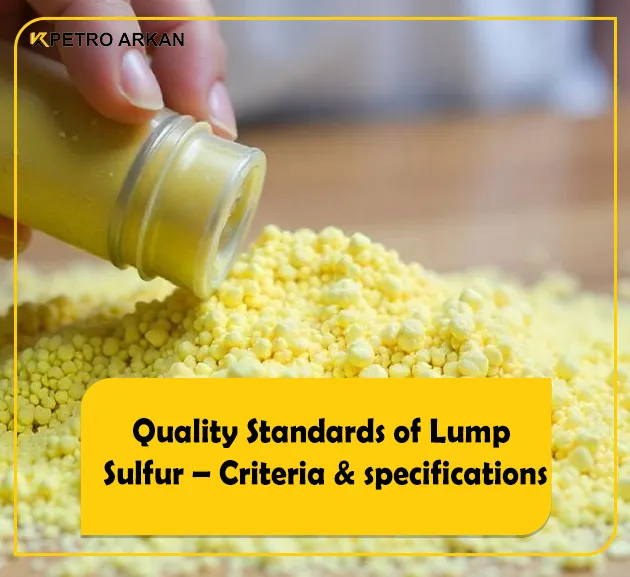
What are the quality standards of lump sulfur? With its high purity and consistent performance, lump sulfur meets strict industry requirements, making it essential in agriculture, chemical production, and manufacturing. Its versatility and reliability ensure it remains a top choice for various industrial applications.
Description of lump sulfur
Lump sulfur, also known as elemental sulfur, is a naturally occurring, bright yellow solid with the atomic number 16 and symbol S. It is extracted from sulfide and sulfate minerals like pyrite and gypsum or found in its pure form in nature.

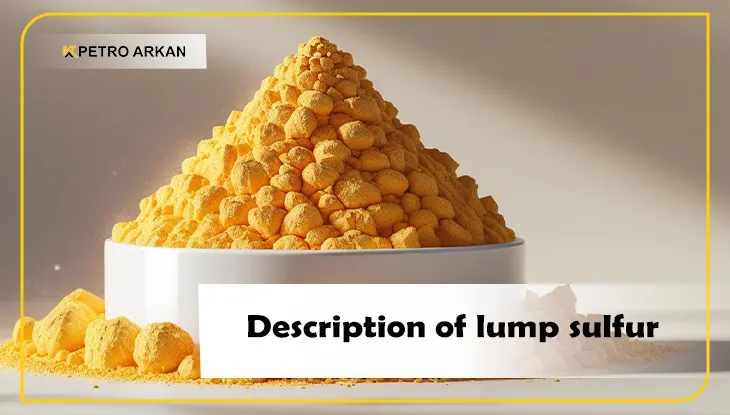
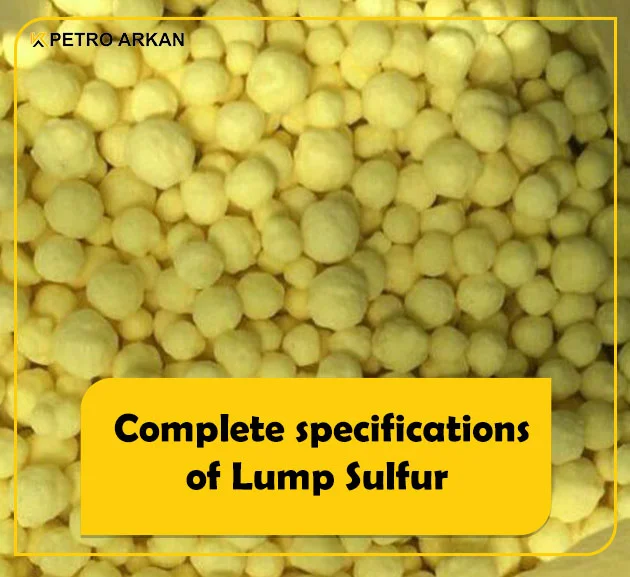
Lump sulfur consists of large, irregularly shaped solid pieces, typically yellowish-brown or orange, with a rough surface texture. The color may vary due to impurities or exposure to moisture. High-quality sulfur, meeting the quality standards of lump sulfur, has minimal impurities, ensuring optimal performance in sulfuric acid production, rubber manufacturing, and petroleum refining.

Lump sulfur has a high melting point (~115°C) and is insoluble in water, but it dissolves in organic solvents like carbon disulfide, benzene, and toluene. Its slow sulfur release makes it suitable for long-term applications like soil amendment and gradual sulfur release in industrial processes. Additionally, it is cost-effective due to requiring minimal processing.
Lump sulfur specifications
Lump Sulfur Properties and specifications truly affect the quality standards of lump sulfur. In this chart, every aspect of properties and specifications is explained.
| Property | Details |
| Allotropes | Forms polyatomic molecules, with S₈ (octasulfur) being the most common. |
| Appearance | Soft, bright-yellow solid; Lump Sulfur also appears as a bright yellow solid. |
| Odor | Faint, similar to that of matches. Lump Sulfur has a mild, matchstick-like odor. |
| Density | 2.07 g/cm³ (Lump Sulfur). |
| Melting Point | 115.21°C (239.38°F). |
| Boiling Point | 444.6°C (832.3°F). |
| Sublimation | Sublimes easily. |
| Polymorph Change | Changes from α-octasulfur to β-polymorph at 95.2°C, below melting temperature. |
| Combustion | Burns with a blue flame, forming sulfur dioxide (SO₂) with a suffocating odor. |
| Solubility | Insoluble in water, soluble in carbon disulfide (CS₂), and slightly soluble in benzene and toluene. |
| Hardness | 1.5 – 2.5 (Mohs scale) (Lump Sulfur). |
| Texture | Brittle, non-metallic (Lump Sulfur). |
| Crystal System | Orthorhombic (Lump Sulfur). |
| Atomic Structure | S₈ rings, sulfur atoms bonded in a crown-shaped structure. |
Lump sulfur grading criteria
Lump sulfur grading is an essential process that ensures the sulfur meets the quality standards of lump sulfur required for its various industrial and agricultural applications.
The grading is typically based on several key factors, each of which plays a significant role in determining its quality, usability, and efficiency in production processes. Here’s a detailed breakdown of the grading criteria:

Purity
The sulfur content is key to the quality standards of lump sulfur, with high-quality sulfur typically containing 99.5% or more. This purity is essential for industries like chemical production, where minimal impurities are necessary for optimal performance. Higher sulfur content ensures better quality for demanding applications.
Particle Size
Larger sulfur lumps are ideal for slow-release or easier handling, while smaller pieces suit applications requiring faster reactions.
Color and Appearance
The color and consistency of lump sulfur reflect its quality and quality standards of lump sulfur. High-grade sulfur is bright yellow and consistent, indicating minimal impurities. Discoloration, such as brown or gray, may signal contamination or the presence of unwanted elements, affecting performance.
Moisture Content
Excess moisture in sulfur can cause clumping, degradation, and increased weight during storage and transportation. Lump sulfur with minimal moisture content (usually below 0.5%) is considered higher quality, meeting the standards for lump sulfur quality. Moisture can also lead to sulfuric acid formation, which can damage storage facilities and equipment.
Contaminants
Contaminants like ash, dirt, or foreign materials can lower sulfur’s quality and affect its functionality. High-quality lump sulfur should be free from impurities, as even small amounts can impact its use in critical products like sulfuric acid and rubber.
Shape
The shape of sulfur lumps affects handling and processing. Uniform lumps are easier to transport, store, and provide consistent sulfur release, meeting quality standards of lump sulfur. Irregular shapes may indicate poor quality or improper handling, impacting efficiency and performance.
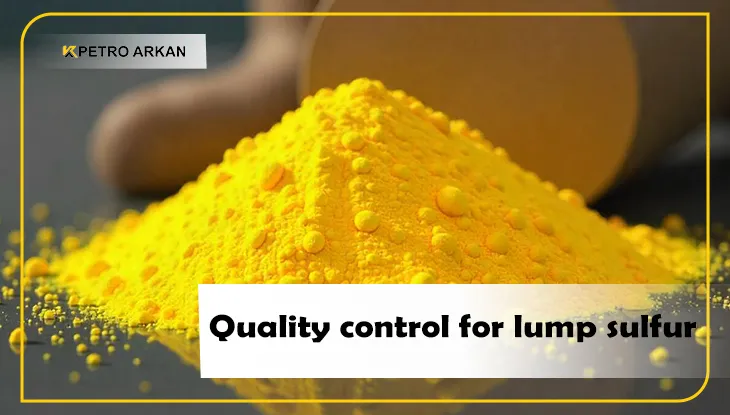
Quality control for lump sulfur
To obtain certification for lump sulfur, companies must provide extensive documentation to verify quality, safety, and compliance. The key requirements typically include:
- Certificates of Analysis (COAs): These documents confirm the sulfur’s chemical composition, purity levels, and compliance with industry specifications.
- Material Safety Data Sheets (MSDS): Essential for safety, these sheets outline proper handling, storage conditions, potential hazards, and emergency response measures.
- Compliance Declarations: Companies must submit statements confirming that the product meets international standards such as ISO and ASTM. These declarations demonstrate adherence to regulatory and quality benchmarks.
Additional lump sulfur certification requirements may vary depending on the market and regulatory body, but proper documentation ensures smooth approval and market acceptance.
Why purchase at Petroarkan?
Petroarkan offers high-quality lump sulfur at competitive prices, providing reliable and cost-effective solutions for various industrial and agricultural applications. With a commitment to excellence, the company ensures strict quality standards of lump sulfur for optimal performance.
Sulfur plays a crucial role in multiple industries, but sourcing the right product can be challenging. Petroarkan simplifies this by supplying premium lump sulfur, making it the preferred choice for those seeking both quality and value.
Summary
Lump sulfur is a high-purity, bright yellow solid used in agriculture, chemical production, and manufacturing. It is graded based on purity (99.5%+), particle size, color, moisture content, and contaminants. Quality control requires COAs, MSDS, and compliance with ISO and ASTM standards for market approval.
FAQ
- Are there any contaminant limits?
Lump sulfur must be free of impurities that impact its use.
- How should lump sulfur be stored to maintain quality?
Store lump sulfur in a cool, dry, ventilated area to avoid contamination.
- Are there environmental considerations for sulfur handling?
Sulfur dust is hazardous, requiring proper handling and emissions control.


No comment