


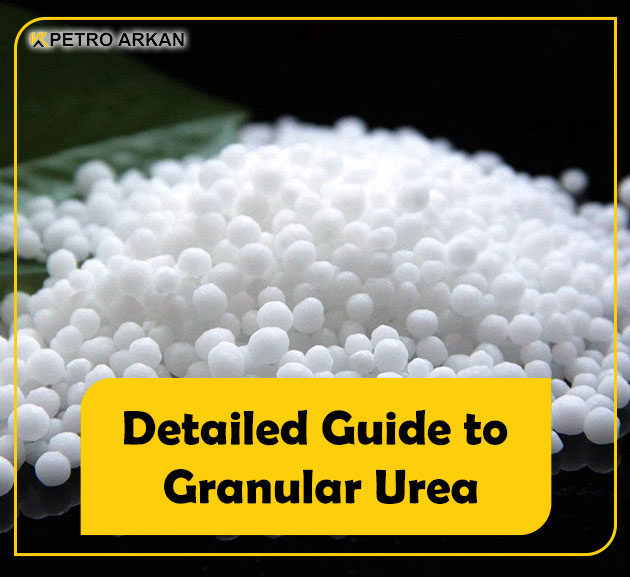
Detailed guide to granular urea provides essential insight for growers, distributors, and buyers who need a clear understanding of product characteristics, application behavior, and performance in real agricultural conditions. From nitrogen content and granule strength to storage stability and field efficiency, knowing how granular urea works helps prevent misuse and ensures consistent crop results. Because granular urea is widely applied across different climates and farming systems, accurate technical knowledge is a key factor in successful fertilization.
Active in international chemical supply chains, PetroArkan operates as a supplier and exporter of agricultural and industrial materials such as urea, sulfur, and caustic soda. With exposure to diverse markets and end-user requirements, this article presents a practical detailed guide to granular urea, helping readers understand how granular urea should be selected, handled, and used in line with globally accepted practices.

If you are looking for clear, experience-based information on granular urea, continue reading this guide.
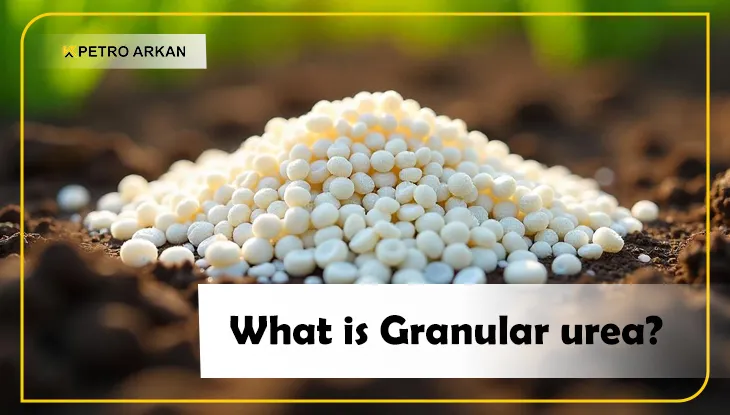
What is Granular urea?
It is commonly used in farming because it is easy to apply. It is a hard, white grain made by a process that forms small, round pellets or beads. To make a Detailed Guide to Granular Urea, we start by mixing ammonia and carbon dioxide using high pressure and heat to create urea crystals.
The crystals are melted down and turned into drops. These drops fall through a tower and become small, round pellets as they cool down. The final product is a compact, hard, and even granule that dissolves well in water.

Detailed Guide to Granular Urea usually has about 46% nitrogen, making it one of the strongest nitrogen fertilizers you can find. It is easy to use and move and can be kept for a long time without losing its usefulness.
One of the biggest benefits of using Detailed Guide to Granular Urea as a fertilizer is that it can be used in many different ways. It can be used on different types of plants, like grains, oilseeds, and vegetables, and in both dry and watered farms. It works well in different types of soil, even in sour (acidic) and bitter (alkaline) soils.
To better understand what makes granular urea effective and reliable, Quality Standards of Granular Urea outlines the key physical and chemical benchmarks every high-quality product should meet.
What are the benefits of granular urea?
Granular urea is a common nitrogen fertilizer used in farming because it has many advantages. Here are some good things about our Detailed Guide to Granular Urea.
High Nitrogen Content
Granular urea has about 46% nitrogen, making Detailed Guide to Granular Urea one of the strongest nitrogen fertilizers. This high nitrogen level helps produce more and better-quality crops.
Easy to Use
Granular urea can be used for crops in different ways, such as spreading it on top, adding it later, or putting it on the sides. It can also be combined with other fertilizers to give plants the right nutrients they need.
Long Lasting
Granular urea can be kept for a long time without becoming less effective, so it’s a great fertilizer for use in faraway or difficult-to-access places.
Maintaining urea quality doesn’t end with production—Granular Urea Storage provides essential guidance on how to properly store granular urea to prevent caking, moisture absorption, and nutrient loss.
Lower Transport Costs
Granular urea is easier to move around, which can help lower transportation expenses compared to other fertilizers.
Versatility
Granular urea can be used on many types of crops, like grains, oilseeds, and vegetables. It works for both dry farming and farms that use water irrigation. It works well in different types of soil, whether it’s acidic or alkaline.
A Detailed Guide to Granular Urea: Properties, Uses, and Performance
Granular urea is one of the most commonly used nitrogen fertilizers in modern agriculture due to its high nitrogen concentration, ease of handling, and wide applicability. With 46% nitrogen, granular urea supports strong vegetative growth and improves crop productivity when applied correctly. Understanding its physical properties, application methods, and agronomic benefits helps farmers and buyers use granular urea efficiently while minimizing nutrient loss and environmental impact.
| Key Aspect | Description |
|---|---|
| Nitrogen Content | 46% total nitrogen |
| Physical Form | Solid, uniform granules |
| Solubility | Highly soluble in water |
| Main Agricultural Uses | Cereals, vegetables, fruits, oilseeds |
| Application Methods | Broadcasting, soil incorporation, fertigation |
| Storage Characteristics | Dry, stable, suitable for bulk storage |
| Handling & Transport | Easy handling with low dust formation |
| Efficiency Factor | High when applied with proper timing and irrigation |
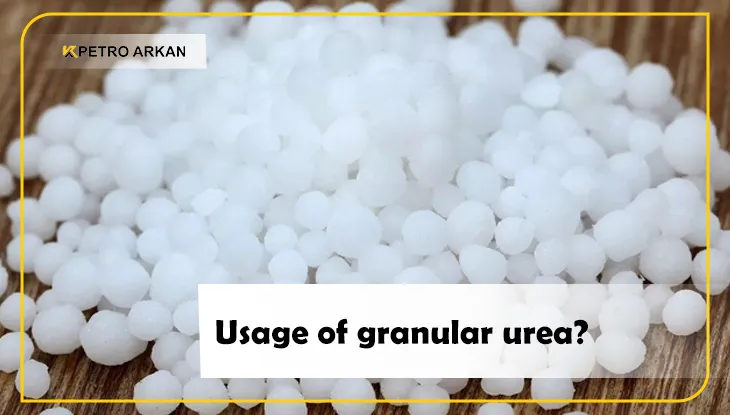
Usage of granular urea?
Urea is used to lower the amount of nitrogen that is lost when ammonia escapes into the air and to clean the soil after winter. The main goal is to help crops use the nitrogen in urea more effectively.
Urea is a useful fertilizer that can be applied to the soil and given to plants as a liquid. The nitrogen in this product is provided to plants gradually, so there aren’t high levels of harmful nitrates in the plants or groundwater, and very little nitrogen is lost from the soil.
The ammonium form of the fertilizer, created during hydrolysis, helps plants grow better, aids in taking up phosphorus, and lowers the risk of too much potassium, which is especially important for farming vegetables and fruits.
It helps plants grow strong roots, develop well, boost their immunity, and lead to a good and healthy harvest. Granulated urea 46% N is a great fertilizer for growing cereal crops, rapeseed, corn, sugar beets, potatoes, vegetables, and grass, and for helping fruit and decorative trees and bushes grow.
Buy the best quality granular urea
When it comes to a high-quality Detailed Guide to Granular Urea, Petro Arkan stands out as a top choice for both agricultural and industrial needs. Manufactured to meet the highest standards, Urea is known for its superior nitrogen content, ensuring that crops receive the essential nutrients needed for optimal growth.
The uniform granule size makes it easy to handle and apply, resulting in efficient distribution and improved crop yields. Whether you’re fertilizing crops or using them in various industrial applications, Petro Arkan Urea guarantees reliability and effectiveness.
By choosing Petro Arkan Urea, you are investing in a product that offers consistent performance and enhanced efficiency. Detailed Guide to Granular Urea high purity and premium quality provide exceptional results, making it an ideal solution for farmers and industries looking to maximize their output.
With Petro Arkan, you can be confident in the quality of your area, which contributes to better crop health, higher productivity, and long-term sustainability. Trust in Petro Arkan Urea for your nutrient needs and experience the difference it makes in your operations.
Summation
Granular urea is a powerful nitrogen-rich fertilizer, containing approximately 46% nitrogen, making it one of the most effective fertilizers for boosting crop growth.
Created by combining ammonia and carbon dioxide under high pressure and heat, granular urea is formed into small, hard pellets that dissolve well in water. Its high nitrogen content aids in producing abundant and high-quality crops and is suitable for use with various plants, including grains, vegetables, and oilseeds.
The benefits of granular urea extend beyond its high nutrient content. It’s easy to handle, has a long shelf life, and is cost-effective to transport. Granular urea can be applied in multiple ways—top dressing, side dressing, or incorporation with other fertilizers—allowing for flexibility based on crop needs.
FAQ Questions
- What makes granular urea effective as a fertilizer?
Granular urea has a high nitrogen content (about 46%), providing essential nutrients that promote strong crop growth and high yields.
- Can granular urea be mixed with other fertilizers?
Yes, granular urea can be easily blended with other fertilizers, allowing farmers to customize nutrient mixes for specific crop needs.
- How long can granular urea be stored?
Granular urea has a long shelf life and can be stored effectively without losing its potency, making it ideal for use in remote or hard-to-access locations.


No comment